Drain Field Service in Fort Myers
Drain field service in Fort Myers. Spot the signs of a failing field, learn what the work involves, and see how the local water table drives field problems.
The drain field and why it fails
The drain field — also called the leach field — is where clarified wastewater from the tank soaks into the soil and is filtered clean. It is the most expensive and least visible part of a septic system, and once it is truly failing, it is far harder to fix than the tank. Most field problems come from one of two sources: solids that escaped a neglected tank and clogged the soil, or ground so saturated that it cannot accept any more water.
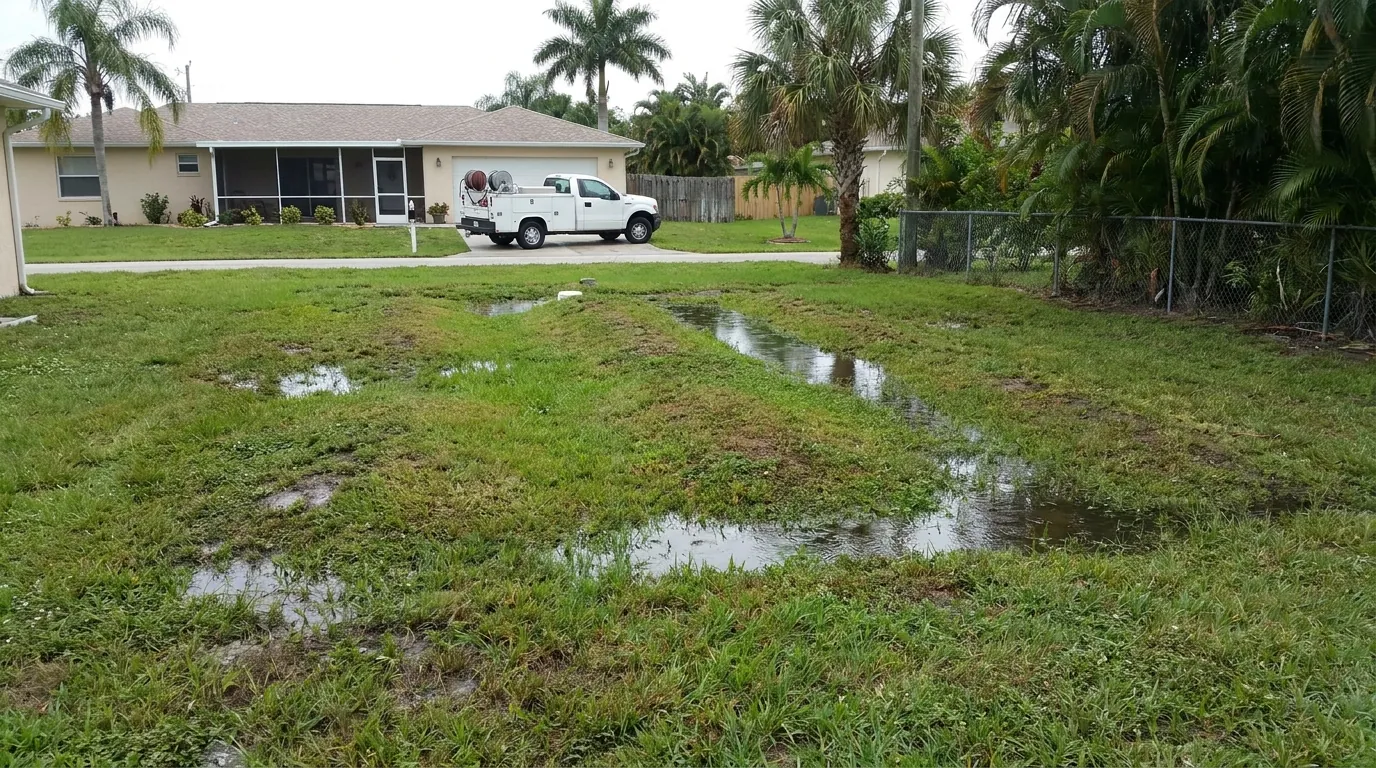
The warning signs are worth learning. Wet, spongy, or unusually green grass over the field, sewage odors outdoors, drains that slow down or back up especially after rain, and effluent surfacing on the lawn all point to a field under stress. Because these symptoms overlap with a full tank, the right first move is usually a septic system inspection to find out whether the field is the actual problem.
Sometimes a field that appears to be failing is really the downstream effect of a tank that was never properly cleaned. In those cases, thorough septic tank cleaning combined with resting the field can bring things back. Getting the diagnosis right before spending money on the field is the whole point.
What drain field service involves
Field service ranges from diagnosis to intervention. These are the typical steps.
-
Confirm the tank is not the cause
Because a full or under-cleaned tank mimics field failure, the tank is pumped and checked first. Fixing the tank sometimes resolves the field symptoms without touching the field at all.
-
Assess the field condition
The ground over the field is evaluated for surfacing effluent, odor, and saturation, and flow from the tank is observed. This determines whether the field is clogged, saturated by groundwater, or genuinely at the end of its life.
-
Relieve and rest where possible
If the field is overloaded but not destroyed, reducing water going into it and giving it time to dry can restore some capacity. We advise on realistic steps to take pressure off the field.
-
Address clogging
Where solids or biomat buildup are choking the soil, appropriate measures are recommended to help restore percolation, along with correcting whatever let solids reach the field in the first place.
-
Plan next steps honestly
If a field is truly failed, no service can revive it, and you deserve a straight answer so you can plan. We explain what we see and what your options are without overselling.
The Fort Myers water table is the deciding factor
Nowhere does local geology matter more than with the drain field. A drain field only works if there is enough unsaturated soil beneath it for effluent to trickle through and be filtered. In Fort Myers, the seasonally high water table can rise within a short distance of the field during the summer rainy season, leaving little room for the effluent to go. That is why so many local field problems appear or worsen from June through September.
The sandy soils here are a mixed blessing. They drain fast when they are dry, which is ideal, but they also offer less filtering distance than heavier soils, so once groundwater rises, the margin for error is small. A field that is comfortable in the dry season can surface effluent after a few days of hard rain. This is exactly why we weigh the time of year when we assess a field.
The best protection for a Fort Myers drain field is upstream: keep the tank pumped and cleaned so solids never reach it, and manage the amount of water entering the system during the wet months. Staying on top of routine septic tank pumping is by far the cheapest way to keep the field alive.
Get your drain field assessed
Serving Fort Myers and nearby communities including Villas, Buckingham, Gateway, Suncoast Estates, Cypress Lake, and North Fort Myers. Call to have your field evaluated before small problems become big ones.
Seeing wet ground over the field after rain? Have it looked at before the next storm.
Frequently asked questions
How do I know my drain field is failing?
Common signs are soggy or extra-green grass over the field, outdoor sewage odors, and drains that back up especially after heavy rain. Because these overlap with a full tank, an inspection is the best way to confirm the field is the cause.
Can a failing drain field be repaired?
It depends on the cause. A field overloaded by a neglected tank can sometimes recover once the tank is cleaned and the field is rested, but a field that has truly reached the end of its life cannot be revived by service alone. An honest assessment tells you which situation you are in.
Why do drain fields struggle so much in Fort Myers?
The high water table leaves less unsaturated soil beneath the field to filter effluent, and the sandy soil offers a short filtering distance. During the summer rains groundwater rises, so many local fields show symptoms only in the wet season.
How can I protect my drain field?
Keep the tank on a regular pumping and cleaning schedule so solids never reach the field, and reduce water use during heavy rain. Routine tank service is the single most effective way to extend a drain field's life.