Grease Trap Pumping in Fort Myers
Grease trap pumping for Fort Myers restaurants and kitchens. Learn the warning signs, the process, and how the local climate affects grease buildup.
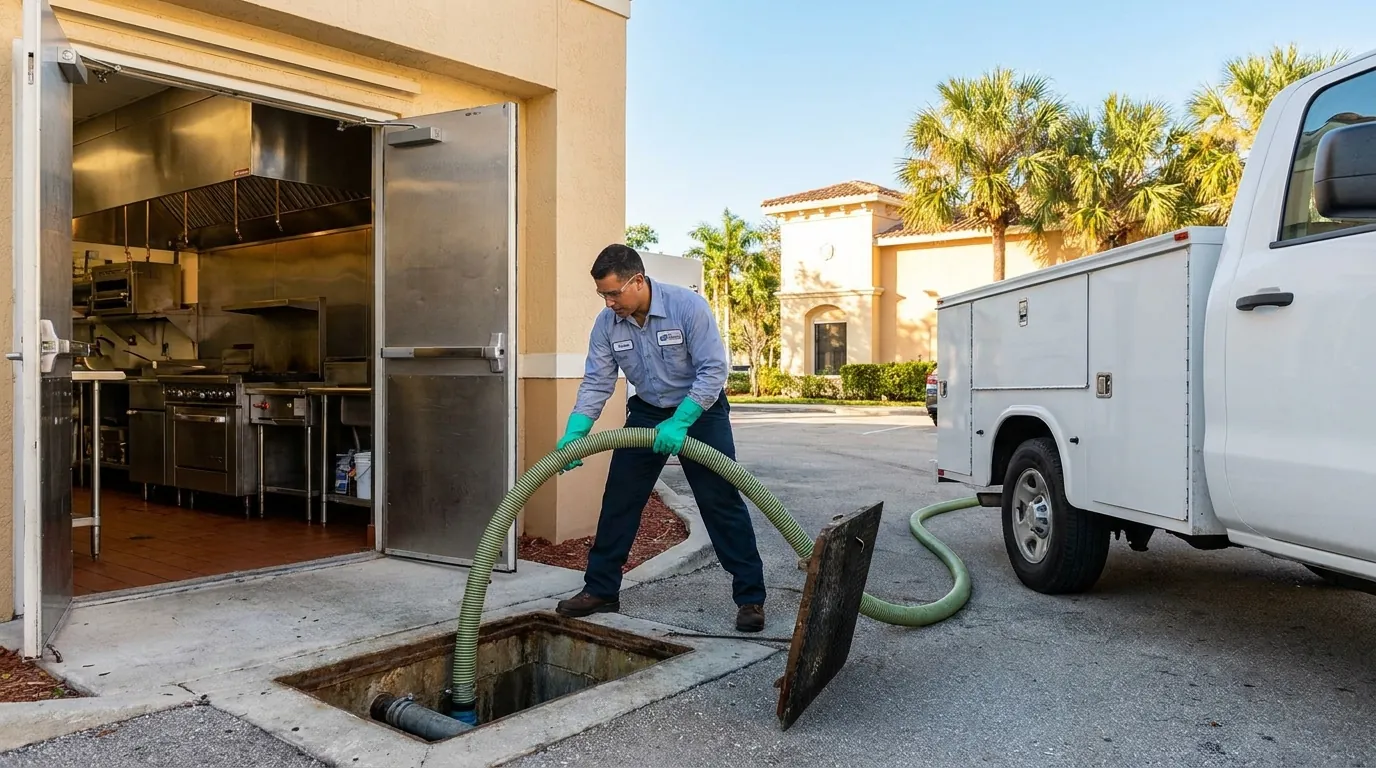
Why grease traps need regular pumping
A grease trap catches the fats, oils, and grease that pour off cooking and dishwashing before they reach the sewer or septic system. As kitchen wastewater cools in the trap, grease floats to the top and food solids settle to the bottom, leaving cleaner water to flow out. Over time both layers build up, and once the trap is too full it stops catching grease — which then coats the pipes downstream and, on a septic property, punishes the tank and drain field.
The warning signs of an overdue trap are familiar to any kitchen: slow-draining sinks, gurgling drains, foul odors near the trap, and grease showing up where it should not. Waiting until the trap overflows means a shutdown at the worst possible moment. Regular pumping keeps the trap doing its job and keeps your kitchen running.
For properties on a septic system, grease trap service and septic tank pumping go hand in hand — grease that gets past a full trap accelerates problems in the tank and field. A septic system inspection can confirm whether grease has already migrated downstream.
How grease trap pumping works
Servicing a trap is more than draining it. Here is what a proper pump-out includes.
-
Open and assess the trap
The trap lid is opened and the grease cap and solids layers are measured so you know how full it was and whether your service interval fits your volume.
-
Pump out grease, solids, and water
The full contents — floating grease, settled food solids, and the water between — are removed with a vacuum truck so the trap is genuinely empty rather than skimmed.
-
Scrape and clean the interior
The walls, baffles, and floor are scraped and cleaned so hardened grease does not remain to seed the next buildup. This step is what keeps the trap working at full capacity.
-
Inspect baffles and fittings
Baffles and inlet and outlet fittings are checked for damage or displacement that would let grease slip through. Small problems are flagged before they cause a backup.
-
Reseal and document
The trap is resealed and the service is documented, which supports the recordkeeping many food-service operations are required to maintain.
How the local climate affects grease buildup
Fort Myers' warm climate matters more for grease traps than people expect. Grease congeals as it cools, and in a warm, humid environment the balance of liquid and solidified grease shifts across the day — but the underlying rule holds: the more volume you run through a trap, the faster it fills, regardless of season. Busy kitchens serving Fort Myers' year-round dining crowd need shorter intervals than quiet ones.
On properties tied to a septic system, the stakes are higher because of local soil and water conditions. Grease that escapes a neglected trap will not filter through the sandy soil of a drain field — it clogs it — and with the high water table already limiting how much the field can absorb, that damage is expensive to undo. Keeping the trap pumped protects the whole downstream system.
The right interval depends on your menu, volume, and trap size, not a generic rule of thumb. A trap that is measured at each service tells you when to shorten or extend the schedule, and pairing trap service with routine septic tank pumping keeps the entire system healthy.
Set up grease trap service
Serving kitchens across Fort Myers and nearby communities including Villas, Gateway, Cypress Lake, and North Fort Myers. Call to schedule grease trap pumping or set up a recurring interval.
Ask us to measure your trap at each visit so your service interval matches your real volume.
Frequently asked questions
How often should a grease trap be pumped?
It depends on your kitchen's volume and trap size, but many food-service operations service traps on a regular monthly or quarterly schedule. Measuring the grease and solids layers at each visit is the most reliable way to set the right interval.
What happens if I skip grease trap service?
An overfull trap stops capturing grease, which then coats downstream pipes and, on a septic property, damages the tank and drain field. That leads to slow drains, odors, backups, and potentially a costly kitchen shutdown.
Does grease trap pumping include cleaning the trap?
A proper service pumps out all layers and then scrapes and cleans the walls, baffles, and floor so hardened grease is removed. Skimming only the top leaves buildup behind and shortens the time before the next problem.
Why is grease especially harmful on a septic system?
Grease that reaches a drain field clogs the soil pores rather than filtering through, and Fort Myers' sandy soil and high water table give the field little margin to recover. Keeping the trap serviced protects the septic tank and field downstream.