Septic Emergency Service in Fort Myers
Septic emergency service in Fort Myers for backups, overflows, and sewage in the yard. Learn what to do first and how local rain and water table drive failures.
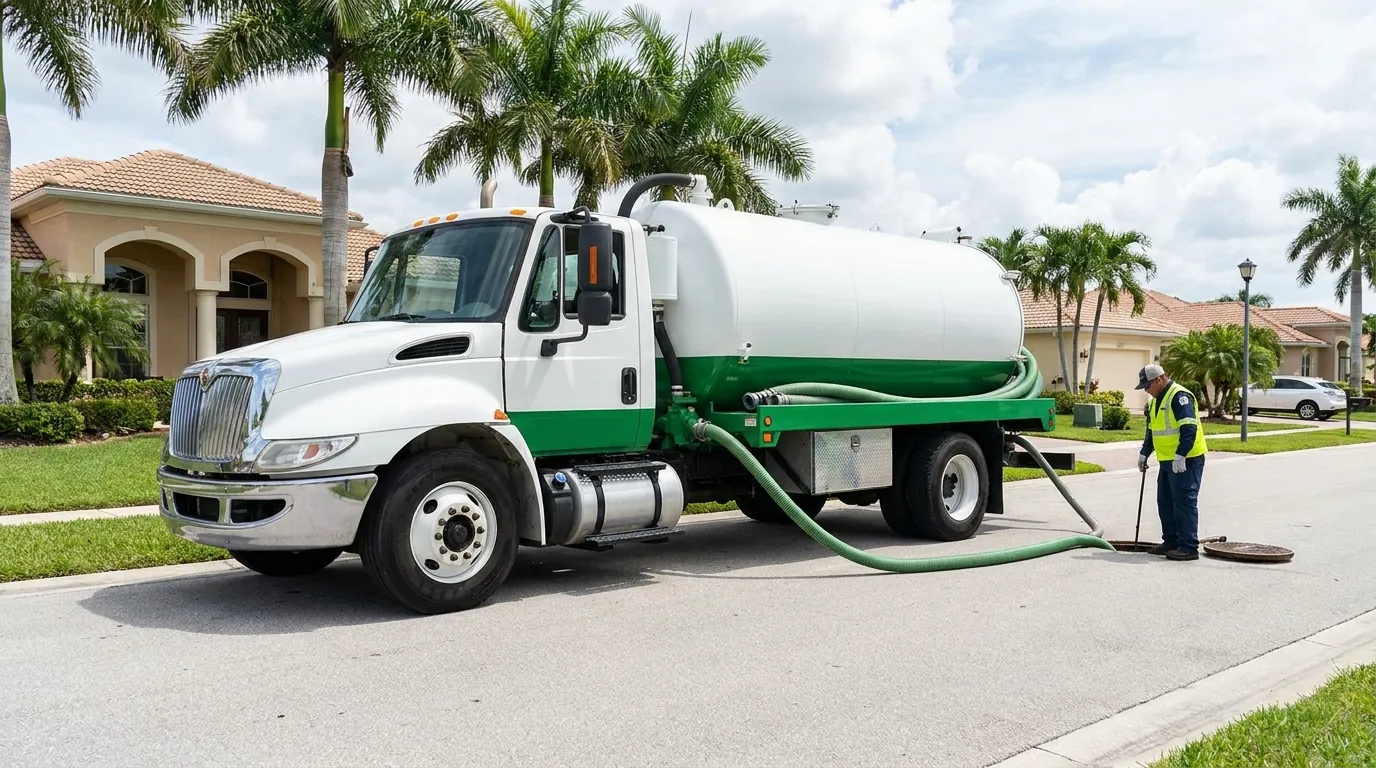
What counts as a septic emergency
A septic emergency is any failure that is putting sewage where it should not be or is about to. That includes sewage backing up into toilets, tubs, or floor drains, wastewater surfacing on the lawn, strong sewage odors indoors, and multiple fixtures failing to drain at once. These are not problems to schedule for next week — standing sewage is a health hazard, and the longer it sits, the more damage it does.
The first steps matter. Stop running water and using fixtures so you are not adding to the problem. Keep people and pets away from any pooled sewage in the yard. Do not attempt to open a full tank yourself; the gases are dangerous and the contents are under no one's control once the system is failing. Then call for help so the tank can be pumped down and the cause identified.
Many emergencies are the visible stage of a problem that was building quietly — an overfull tank, a clogged outlet filter, or a saturated field. Once the immediate crisis is handled, a septic system inspection determines whether you need routine septic tank pumping or something more.
How an emergency call is handled
The priority is to stop the overflow, then fix the underlying cause. Here is the typical sequence.
-
Assess and make safe
On arrival the situation is assessed to identify where sewage is going and to keep the area safe. The most urgent goal is stopping the overflow so no more waste escapes.
-
Pump the tank down immediately
The tank is pumped to relieve the immediate pressure, which usually stops backups into the house and surfacing in the yard within a short time.
-
Find the underlying cause
With the tank down, the technician checks whether the trigger was an overfull tank, a blockage, a failed baffle or filter, or a saturated drain field — because each points to a different fix.
-
Clear blockages and advise
Simple blockages and clogged filters can often be cleared on the spot. Where the field is the problem, you get straight guidance on what has to happen next.
-
Plan to prevent a repeat
Before leaving, we lay out the steps that keep this from happening again, from a regular pumping schedule to addressing a struggling field.
Why emergencies spike in the Fort Myers rainy season
Timing is no coincidence in Southwest Florida. The majority of septic emergencies cluster in the summer rainy season, when the high water table rises toward the bottom of the drain field. When the ground around the field is already saturated, effluent has nowhere to go, so it backs up toward the tank and then into the house or across the lawn. A system that coped all winter can fail within days of a heavy storm.
The region's sandy soils drain quickly in dry weather but offer little buffer once groundwater is high, so the swing from fine to failing can be fast. Homes that entered the wet season with a full tank are the most exposed, which is why getting ahead of pumping before summer prevents so many emergencies. If you want to understand the seasonal risk in detail, our team can walk you through how rain and the water table interact with your specific system.
After the immediate emergency is stabilized, the honest next step is usually drain field service or a full inspection, because a rain-driven backup often signals a field that is at or near its limit. Fixing the tank buys time; understanding the field prevents the next call.
Septic backing up? Call now
Emergency response for Fort Myers and nearby communities including Villas, Buckingham, Gateway, Suncoast Estates, Cypress Lake, and North Fort Myers. Stop using water and call for help.
Keep people and pets away from any pooled sewage until the system is pumped down.
Frequently asked questions
What should I do the moment my septic backs up?
Stop running water and using fixtures so you do not add to the overflow, and keep people and pets away from any pooled sewage. Then call for emergency service so the tank can be pumped down and the cause identified quickly.
Why do so many septic emergencies happen after heavy rain?
During the Fort Myers rainy season the high water table rises toward the drain field, leaving effluent nowhere to go, so it backs up. A system that ran fine in the dry months can overflow within days of a major storm.
Will pumping the tank fix the emergency?
Pumping relieves the immediate pressure and usually stops the backup right away, but it is not always a permanent fix. If a saturated or failing drain field caused the backup, the field still needs to be addressed to prevent a repeat.
How can I avoid a septic emergency?
Keep the tank on a regular pumping and cleaning schedule, pump before the summer rains so the tank has full capacity, and reduce water use during heavy storms. Catching a struggling field early through inspection also heads off most emergencies.