Septic Tank Cleaning in Fort Myers
Septic tank cleaning in Fort Myers. Learn how cleaning differs from pumping, the warning signs, and how sandy soil and a high water table affect the job.
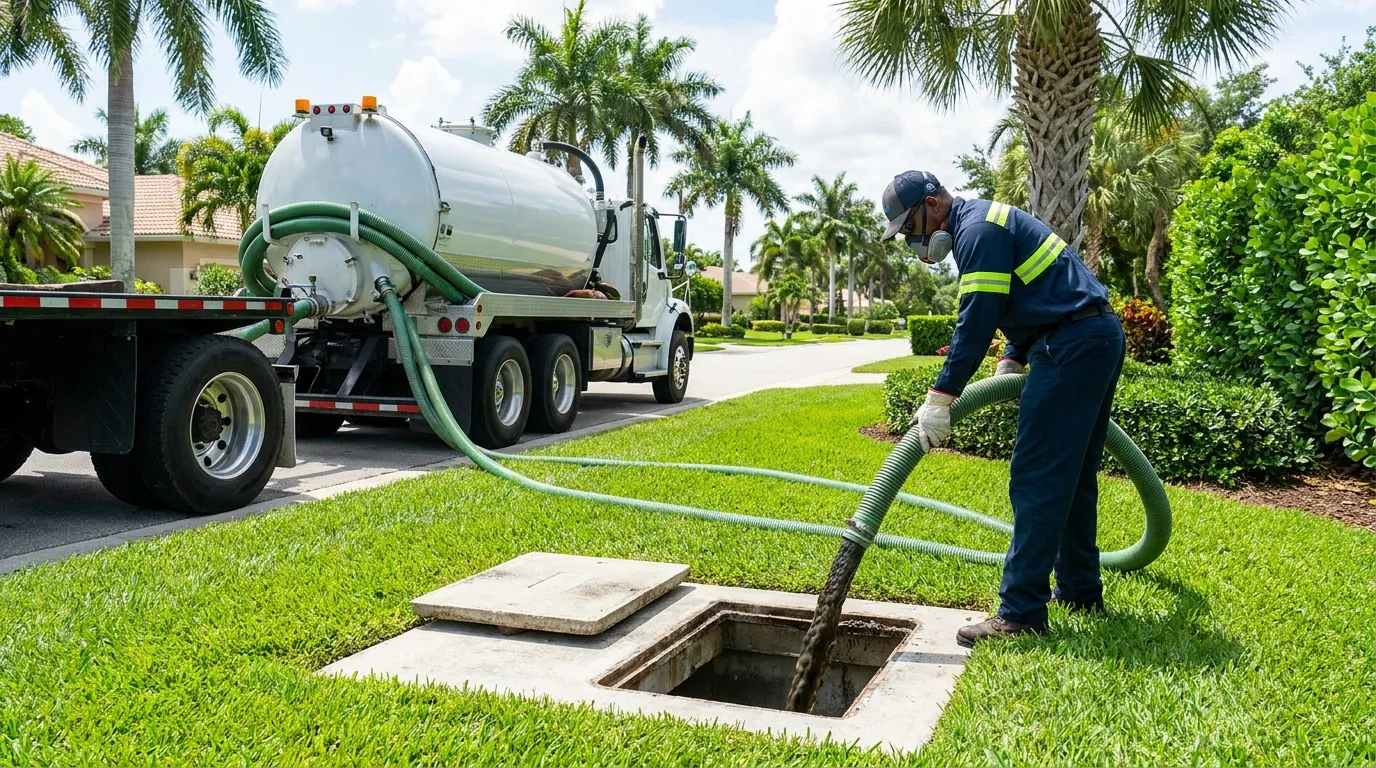
Cleaning versus pumping a septic tank
People often use 'pumping' and 'cleaning' to mean the same thing, but there is a real difference. Pumping removes the liquid and the loose sludge and scum. Cleaning a septic tank goes further: it removes the compacted sludge that has hardened on the bottom and the crusted scum along the walls, and it flushes the tank so very little material is left behind. Over years, that hardened sludge is exactly what pumping alone tends to leave in place.
You need cleaning of a septic tank — not just a routine pump — when the tank has gone a long time without service, when a previous pump-out did not fix slow drains, or when an inspection finds a thick, packed sludge layer. Signs include drains that stay sluggish after pumping, persistent odors, and solids visibly carrying over toward the outlet. If the tank has never been fully cleaned, the first proper clean-out often makes a dramatic difference.
Cleaning a septic tank works best alongside the checks done during septic tank pumping and a septic system inspection, so you know the tank is not only empty but structurally sound and flowing correctly.
How septic tank cleaning is done
Cleaning is more thorough than a standard pump-out. Here is what a full clean-out includes.
-
Empty all compartments
The vacuum truck first removes the liquid and loose solids from every compartment of the tank, exposing the compacted material below.
-
Break up and remove hardened sludge
The packed sludge on the tank floor and the crusted scum on the walls are broken loose, often with water agitation, and vacuumed out. This is the step routine pumping usually skips.
-
Rinse the interior
The tank walls and floor are rinsed so the remaining residue can be removed, leaving the tank close to bare. A clean tank restores full working volume for settling.
-
Clean and check the outlet filter
The outlet filter, where present, is pulled, cleaned, and reseated. A clogged filter is a frequent reason a 'cleaned' tank still drains slowly, so it is handled every time.
-
Inspect and reseal
With the tank bare, the baffles and walls are checked for damage before the lids are resealed. Any concerns are noted so you can plan repairs before they become emergencies.
Why Fort Myers tanks need thorough cleaning
In Southwest Florida the high water table can slow how fast a drain field accepts effluent, which means solids have more chance to accumulate in the tank rather than being carried through. Over time, that accumulation packs down into the dense sludge layer a simple pump-out leaves behind. Warm, humid conditions also keep biological activity high, so scum crusts can build faster than owners expect.
A properly cleaned tank protects the most expensive part of your system, the drain field. When solids escape a neglected tank, they clog the soil pores in the field, and in this region — where the field already has to work harder against seasonal groundwater — that damage is hard and costly to reverse. Keeping the tank genuinely clean is cheap insurance against drain field service you would rather avoid.
Homes that entertain heavily, use a garbage disposal, or have larger households in Fort Myers tend to build sludge faster and benefit from a full clean-out sooner. If routine pumping is not keeping drains clear, cleaning of the septic tank is usually the fix.
Schedule a full clean-out
Serving Fort Myers and nearby communities including Villas, Buckingham, Gateway, Cypress Lake, and North Fort Myers. Call to book septic tank cleaning or ask whether a clean-out or a routine pump is right for you.
If a recent pump did not clear your slow drains, a full cleaning is often the missing step.
Frequently asked questions
What is the difference between septic tank cleaning and pumping?
Pumping removes liquid and loose sludge and scum, while cleaning also removes the compacted sludge and crusted scum that pumping leaves behind. Cleaning restores more of the tank's working volume and is the better choice when a tank has been neglected.
How often does a septic tank need cleaning?
It depends on tank size, household size, and how quickly solids build, but a full clean-out is warranted whenever sludge has compacted or routine pumping stops keeping drains clear. Measuring sludge levels during service tells you where you stand.
Will cleaning fix my slow drains?
If the slow drains are caused by an overfull or heavily sludged tank or a clogged outlet filter, a thorough cleaning often clears them right away. If the drain field is saturated, cleaning helps but the field itself may also need attention.
Do I need chemical additives after cleaning?
A healthy tank re-establishes its natural bacteria on its own, so most homes do not need additives. The most reliable maintenance is regular service and keeping harsh chemicals, grease, and non-flushables out of the system.