Septic System Inspection in Fort Myers
Septic system inspection and repair guidance in Fort Myers. Find out what an inspection checks, warning signs, and how local water conditions affect results.
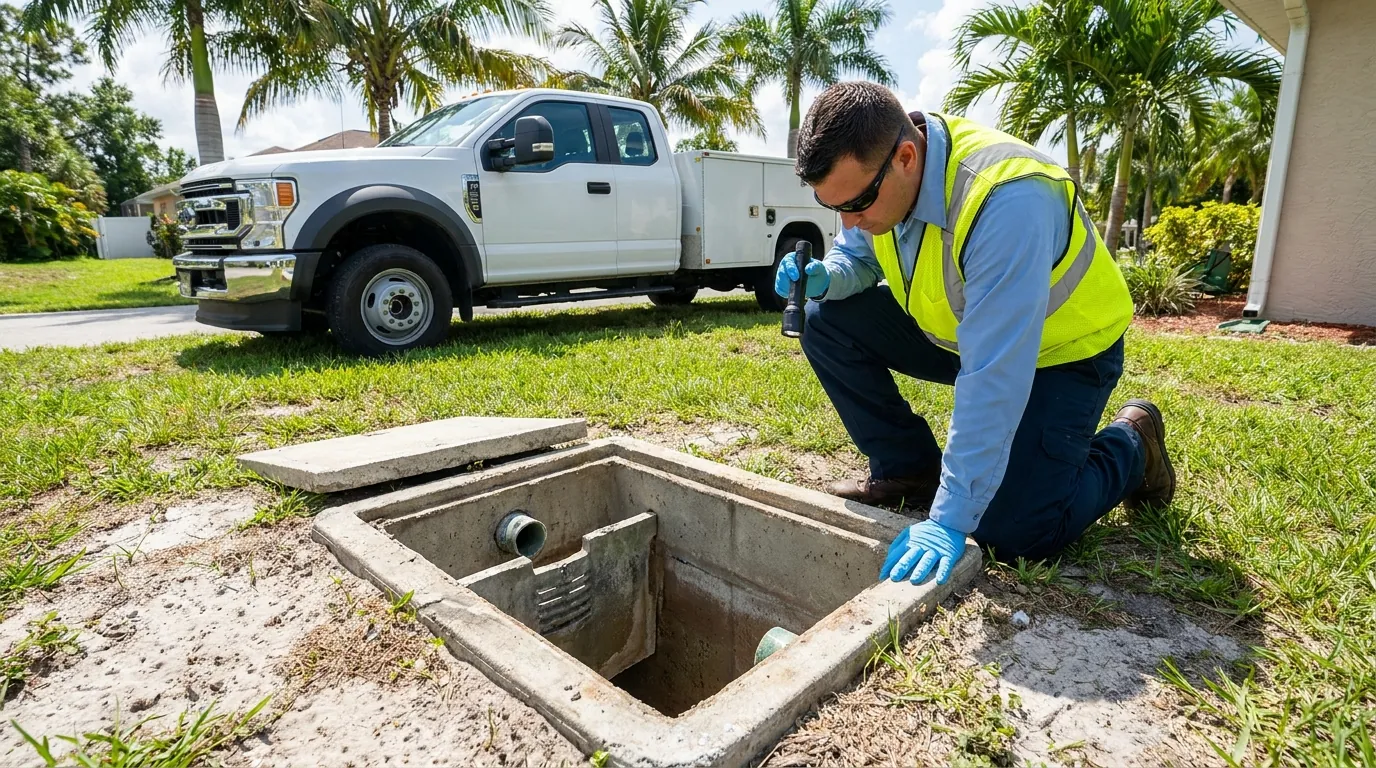
Why inspect a septic system
A septic system inspection tells you the true condition of a system you cannot see. People book one for a few reasons: they are buying or selling a home and need to know what they are getting, they have recurring slow drains or odors and want a diagnosis, or the system is old and they want to plan ahead before it fails. In every case the goal is the same — find problems while they are still small and cheap, before they turn into a yard full of sewage.
Warning signs that call for an inspection include drains that back up in more than one fixture, sewage odors indoors or over the drain field, unusually lush or soggy grass above the tank or field, and any history of the system 'acting up' after heavy rain. If you have never had documentation of when the tank was last pumped or what shape the field is in, an inspection turns guesswork into a plan.
An inspection is also the honest first step before any septic system repair. Replacing a baffle, adding an outlet filter, or rehabilitating a drain field are very different jobs, and you should know which one you actually need. Inspection often pairs naturally with septic tank pumping, since an empty tank is far easier to evaluate.
What an inspection covers
A thorough inspection looks at the whole system, not just the lid. These are the main checks and why each one matters.
-
Locate the system and review layout
The tank and drain field are located and mapped, and the technician confirms the number of compartments and the general design. Knowing exactly where everything sits saves money on every future service.
-
Measure sludge and scum levels
Sludge and scum depths show how full the tank is and whether it is being pumped often enough. Levels that are too high explain slow drains and warn that solids may be reaching the field.
-
Check baffles, filter, and tank integrity
The inlet and outlet baffles, outlet filter, and tank walls are examined for cracks, corrosion, or displacement. A broken outlet baffle lets scum flow to the drain field, a common cause of premature field failure that repair can address early.
-
Evaluate the drain field
The ground over the field is checked for wet spots, odors, and effluent surfacing, and flow from the tank outlet is observed. In Fort Myers this step matters most, because a high water table can mask or worsen field problems depending on the season.
-
Report findings and repair options
You get a plain-language summary of the system's condition and, where needed, options ranging from a simple part replacement to a full septic system repair plan. No work proceeds without your go-ahead.
How local conditions shape the results
Southwest Florida's high humidity, sandy soils, and high water table all show up in an inspection. Sandy soil accepts water well when it is dry, so a field can look fine in the dry season and still be marginal once summer groundwater rises. A good inspection accounts for the time of year — a system that passes easily in March may be struggling in September, and the report should say so.
The high water table is the single biggest local factor. When groundwater sits close to the bottom of the drain field, effluent has less soil to move through before it reaches saturated ground, so a field near the end of its life fails sooner here than it would in drier regions. Corrosion is another humidity-driven issue: baffles and steel components deteriorate faster in this climate, which is why we check them closely.
If the inspection turns up a saturated or slow field, the next conversation is about drain field service; if it reveals a chronically overfull tank, regular septic tank pumping may be all that is needed. Either way, you leave with a clear picture instead of a surprise.
Book a septic inspection
Serving Fort Myers and nearby communities including Villas, Buckingham, Gateway, Suncoast Estates, and North Fort Myers. Call to schedule an inspection or discuss a repair.
Buying or selling a home? Ask for an inspection timed to your closing schedule.
Frequently asked questions
When should I get a septic system inspection?
Book one before buying or selling a home, when drains repeatedly back up or smell, or when the system is old and you want to plan ahead. Many owners also inspect every few years alongside pumping to catch small problems early.
Can an inspection tell me if I need a septic system repair?
Yes. An inspection identifies specific issues — a cracked baffle, a clogged outlet filter, or a saturated drain field — so you can weigh a targeted repair against a larger job. It replaces guesswork with a defined scope of work.
Does the tank need to be pumped for an inspection?
Not always, but an empty tank makes the baffles, walls, and outlet far easier to evaluate, so pumping and inspecting together often gives the clearest results. We can advise based on when your tank was last serviced.
Why do Fort Myers systems fail sooner than expected?
The high water table leaves less unsaturated soil beneath the drain field, so an aging field reaches its limit faster than in drier climates. Humidity also speeds corrosion of tank components, which is why local inspections weigh the season and the field condition heavily.